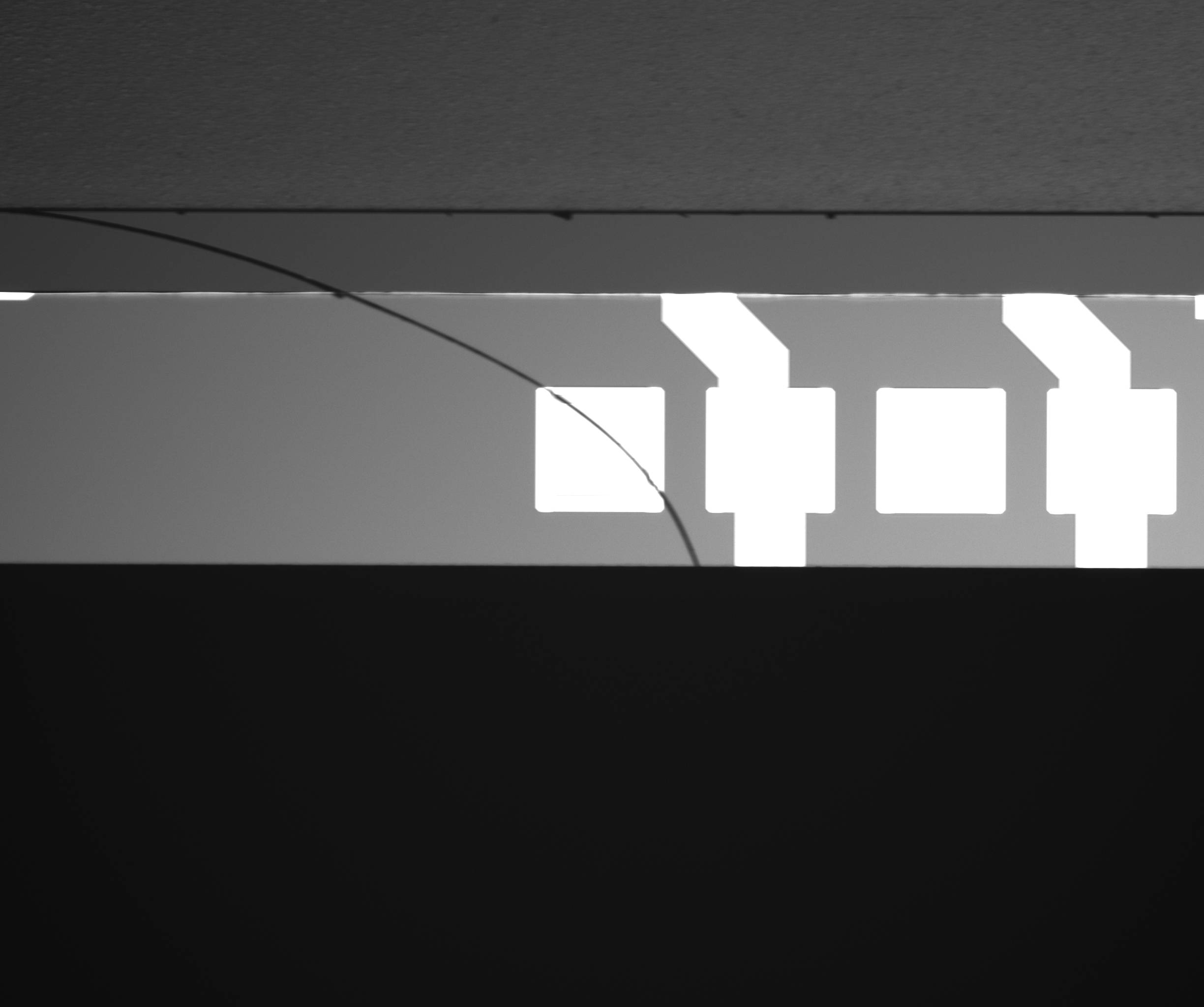
Define each defect type
A crack, an edge chip and a missing piece have different appearance characteristics. Define the defect categories and acceptance rules separately, rather than treating all breakage as a single condition.
- Visible surface cracks and continuity
- Edge chipping and missing corners
- Broken-part presence and defect-region reporting
What does micron-scale mean?
A micrometre, written μm, is a unit of length. Specify whether the requirement concerns defect width, length, detection probability or measurement accuracy. Pixel size alone does not establish a detection limit.
- Define field of view and physical pixel scale
- Assess contrast across bright and dark patterns
- Validate borderline defects and false rejects
Optimize the complete inspection cycle
High-speed operation involves exposure, image transfer, processing and equipment communication. Focus on valid ROIs and exclude irrelevant background before evaluating candidate regions.
- Measure acquisition, processing and result output separately
- Review ROI size and data volume
- Match handshakes to actual part handling
Recognize optical inspection limits
Internal cracks or defects without visible optical contrast may require a different inspection method. Minimum detectable size, accuracy and throughput must be verified with calibrated samples and the intended setup.
Frequently asked questions
Does the photograph prove a specific μm limit?
No. Calibration, known defect samples and validation records are required. The image illustrates visible crack contrast.
Is a fixed parts-per-second rate implied?
No. Cycle time depends on exposure, field of view, data volume, processing and equipment communication.